
Welcome back to Critical Materials, your go-to source for the biggest news driving the future of transportation.
[Before we get into today’s news, InsideEVs Senior Editor Tim Levin here with a quick programming note: Starting next week, Critical Materials will hit your inbox once a week instead of every morning.
We’re going to take the extra time to bring you even sharper analysis of the week’s most important EV news, spotlights on cars we’re testing, a comprehensive digest of the week’s mobility headlines, and more fun segments we can’t wait to show you.
Keep an eye out for the first weekly edition of Critical Materials next Friday.
Thank you for reading! And if you ever have feedback on the newsletter, drop me a line: [email protected]]
In today’s email:
🇨🇳 BYD is selling more EVs than Tesla worldwide and its not even close.
🚗 Rivian’s R2 rollout could be the most aggressive the EV industry has ever seen.
🔌 Why EVs still far outnumber public fast-charging stations in the U.S.
– Today’s newsletter was written by Suvrat Kothari.

BYD Is Vastly Outselling Tesla Across The Globe

BYD is quietly becoming the Toyota of the electric car universe. The Japanese automaker still reigns as the world’s largest seller of gas cars, but when it comes to electric vehicles, BYD is the one that’s setting the pace.
As recently as 2020, that crown belonged to Tesla, which was selling more EVs across North America, Europe, Asia, and Australia than anyone else. But the U.S. automaker’s sales have cratered over the last couple of years, suffering from CEO Elon Musk’s political antics, a model lineup that has failed to evolve and a pivot towards AI and robotaxis.
As a result, BYD now outsells Tesla in as many as 20 markets. And as growth stalls at home, the Chinese automaker is compensating by pushing its models into 113 countries and regions, according to Japanese newspaper Nikkei.
Here’s more from that report:
In addition to European nations like the U.K., Spain and Italy, the automaker also passed Tesla in Hong Kong and Singapore, where luxury vehicles are said to have a large market share. Last year, BYD toppled Tesla as the world's No. 1 EV seller.
One such destination is Uruguay, with a population of about 3.4 million and a new-vehicle market of just 70,000 units.
BYD laid the groundwork for its full entry into Uruguay by conducting road tests of electric buses in the early 2010s. It has since delivered large electric buses and electric taxis and built relationships with the local government and dealers.
It’s not all smooth sailing, though. Back in China, BYD is facing cutthroat domestic competition, fewer incentives for consumers, and a government crackdown on predatory pricing, all of which are weighing on sales growth.
Still, the company is punching its way through. It just revealed its 1,500 kilowatt (1.5 megawatt) “Flash” chargers in China on Thursday, along with the second-generation Blade battery. Its supplier Robosense also revealed one of the most advanced yet for BYD’s passenger cars and robotaxis.
It just goes to show how serious BYD is about protecting its tech lead in the EV world. With Tesla letting its guard down, the real question now is which company will step up and take the fight to BYD.

Rivian’s Ambitious R2 Sales Targets
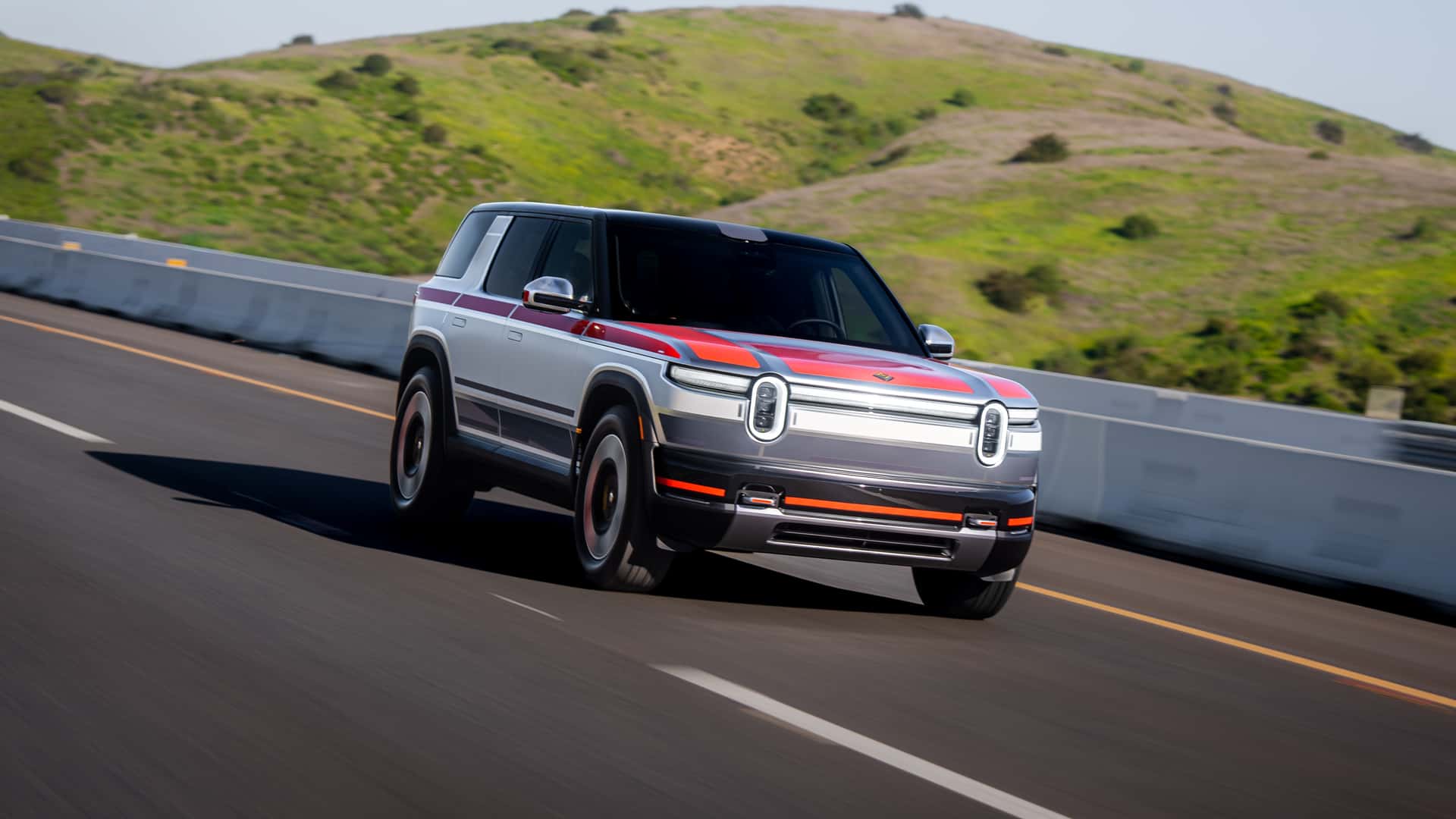
Rivian is banking on an exceptionally quick ramp up of the R2 crossover, according to a fascinating analysis by TechCrunch out Thursday. The automaker is planning to sell between 20,000-25,000 units of the electric SUV this year, as InsideEVs reported after the startup’s latest earnings call last month.
Only two other EVs have ever crossed the 20,000-unit mark within their first six months on sale, TechCrunch found. Here’s more from that report:
The Model Y, launched in March 2020, took only around four months to surpass 20,000 vehicles sold. Rivian is aiming to do it in about six months, or roughly the same amount of time it took the Honda Prologue to reach that sales milestone when it debuted in 2024.
The difference, though, is that the R2 is stepping into a much tougher market than either of those vehicles faced at launch. The $7,500 federal EV tax credit is gone. The Trump administration has also rolled back fuel economy rules that once nudged automakers to push more EVs out the door.
That means Rivian will have to deliver R2 volumes on merit alone. If the early reviews are any indication, it just might. We've already driven a prototype, and came away mighty impressed.

EVs Still Vastly Outnumber Fast-Chargers In The U.S.

The U.S. is adding public fast-charging stations at a staggering rate even as EV sales have somewhat cooled following the end of the federal tax credit. But the number of EVs on the road isn't declining, it's only growing. And that means America still needs many more chargers to keep up with demand.
Here’s more from Bloomberg
“A lot of people get fixated on the new EV sales,” ChargePoint Chief Executive Officer Rick Wilmer said. “But what really drives our business is not only new EV sales, but the cumulative number of EVs that are on the road.”
Despite the uptick in the number of chargers and their ability to sling electrons faster, the average US charging station is still fairly busy most of the time.
The number of charging cords in the EVgo network has roughly doubled in the past three years. Yet each cord, on average, has steadily pumped more electrons in a given period.
The numbers tell an interesting story. Back in 2015, the U.S. had just 60 EVs per public fast-charging port. Despite record charger growth in the years since, that ratio actually got worse before it started to get better.
The ratio grew to 94 EVs per port in 2023 and peaked at 97 in 2024, before slowing down to 92 last year. It's a small sign that supply is finally starting to catch up with demand.
For charging companies, though, the work is far from over. Analysts expect EV sales to rebound down the road, and when that happens, no automaker would want their customers to turn up to overcrowded stations and long waiting lines.

Get Fully Charged
Here are more stories worth reading, from InsideEVs and around the web:
BYD did it again. The company’s new charging system and batteries enable EVs to charge from 10%-97% in an astonishing 9 minutes [InsideEVs]
A Buick plug-in hybrid minivan just set a new range record. [InsideEVs]
BYD-backed Robosense reveals lidar sensor with up to 2,160 beams. [CarNewsChina]
Western automakers outsourced supply chains for decades—now Chinese rivals have the cost edge. [CNBC]
Last but not least, our question of the day:
Do you think the R2 will turn Rivian into a profitable company and make it a genuine Tesla rival?
Contact us: [email protected]
If you love the InsideEVs newsletter, you need to check out the rest of the newsletters across the Motorsport Network:
The Update from InsideEVs: A newsletter to inform and empower a new generation of drivers about the high-tech, zero-emission transformation of the car industry. (Join now)
Motor1: The best car reviews, buying advice and enthusiast stories. (Join now)
For the racing fan: The daily Autosport Debrief delivers the best of Autosport to your inbox daily. (Join now)