
Sponsored by


Happy Friday, and welcome to Critical Materials, your source for the biggest stories shaping the future of the auto industry.
Every Friday, we break down the week’s biggest EV news, keep you up to speed on the cars we’re testing, and recap must-read stories from around the web on driverless cars, batteries, charging, and more.
– Today’s email was written by Rob Stumpf and Mack Hogan.

Plug In: Genesis Reaches Its Full Potential
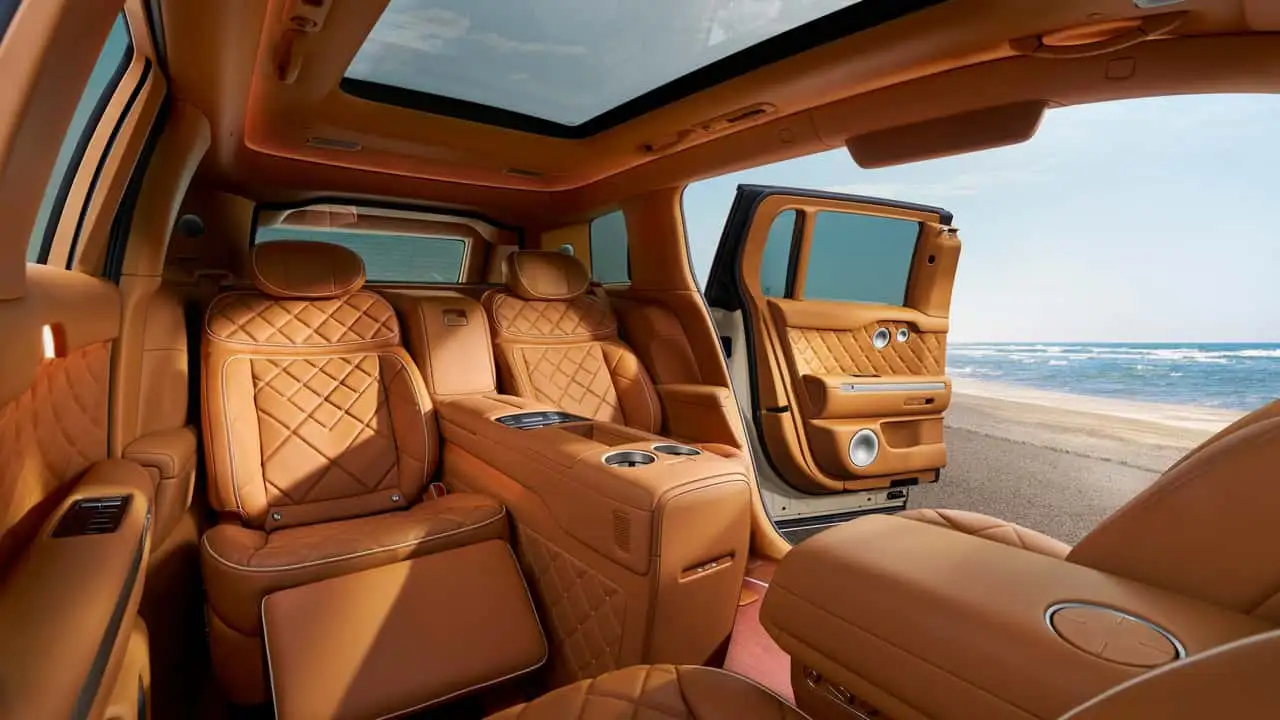
The interior of the GV90 Neolun. Photo: Genesis
Genesis’ first EVs didn’t blow me away. But its new GV90 electric flagship did.
It’s as simple as that. The company’s parent, Hyundai Motor Co, has had tremendous success with electric models. The Hyundai Ioniq 5, Ioniq 9, Kia EV6, and EV9 all launched to critical acclaim and quickly racked up sales. But Genesis’ electric ambitions got off to a shakier start.
Despite packing the same 800-volt power electronics as their Hyundai siblings, the GV60, Electrified GV70, and Electrified G80 all came with big catches. The GV60 was a lovely performer, but middling range and an awkward, small shape make it a niche player in the U.S. The GV70 and G80 EVs are both converted gas cars, with all of the packaging compromises that entails. None of them have been compelling enough to become massive sales successes or really elevate the badge, in my view.
The new GV90 is different.
I’m en route back from the reveal event of the three-row flagship, and I’m far more optimistic about this than any aspirational Genesis product to date. Its specs are good, if expected: Over 300 miles of range, 657 horsepower, and 350 kW charging that can get you from 10-80% in as little as 22 minutes.
But the real showstopper is the design. The GV90 offers massive, 24-inch wheels and a sleek, minimalist design. Its lights sit flush with the bodywork, packing all of their functions into two slim light bars. The rear end has the contours of a classic American station wagon, but with a futuristic flourish. It’s all simple enough, but the result is stunning.
Then you see the Neolun, and its big, silly, glorious doors. Call them coach doors or suicide doors, but probably not “Neolun Arch Doors,” as the brand suggests. Either way, they open from opposite directions to reveal a wide open, B-pillar-less cabin. There’s a wide open space between the two rows, leaving room for the front seats to pivot 180 degrees and face the rear.
Keep them face forward, and you can bask in the potent glow of a 23.6-inch OLED display. That’s if you’re moving. When parked, you can grab an extra inch, with the whole thing motoring up to give you a better movie-viewing experience. Yes, there will be video streaming apps, along with plenty of new software features.
The tweeters on the dash are mechanized, too, with a little curtain-opening sequence that plays on startup. That’s when the motorized PRNDL lever—positioned facing straight up from the steering wheel at rest—pivots down to its operating location on the right side of the wheel. The central controller in the console spins and reveals itself, too. The vents even auto-target your face. You get the impression that there are a lot of helpful little gizmos spinning around you, and the car’s ability to surprise you is charming.
It should be plush to drive, too, as the gas-powered G90 flagship sedan is a butterball. Every Genesis has come off the line with excellent driving dynamics, and with air suspension, active dampers, and two limited-slip differentials, I expect the GV90 will be no exception.
At its best, a luxury brand is doing things no competitor can match. And when I saw the stability of the massive coach doors, the spinning seats, and the opulent interior, I realized that very few companies can make an EV that feels and looks this good. More than any EV the company has done before, this one looks like it’s pushing the boundaries.

Will that make it a hit?
I can’t answer that without a key detail: the price. Genesis didn’t say a word about its starting MSRP, but I think we can safely assume it’ll be eye-watering. A fully loaded G90 is already $107,945, and the GV90 is far bigger, more powerful, offers more equipment, and has fewer direct competitors. Cars like the Cadillac Escalade IQ and Mercedes-Benz EQS SUV both compete in a similar segment, but top-end versions of both cost well over $150,000.
I think the base GV90 will come in well below that and capture a very reasonable customer base, with its three rows of seats and captivating design. But it’s the Neolun that’ll make people ask “what is that?” And that one’s going to be an interesting sell. Because things like coach doors, 24-inch-wheels, and dramatic sand-colored paint are made to broadcast status and opulence. But if that’s your target, and you’re spending a six-figure sum to hit it, will you spend that cash on a relatively new brand?
Genesis is betting that the dramatic design and cush dynamics will sell it. The company is also introducing a new generation of software, building out its dealer network, and quickly updating its core lineup. The goal is that the GV90 serves as a brand-elevating flagship to keep new, wealthy customers pouring in.
Will it work? Genesis executives pointed to a 22-month streak of year-over-year sales gains, with the brand setting sales records over and over again. It’s done that with solid products and great designs. The question was whether it could reach the next level. With the GV90, I think it can.
-Mack Hogan
Short on cash? Get up to $750, no credit check.

Is payday still a few days away, but the bills aren't waiting? We've all been there. That's why there's Klover — a cash advance of up to $750* from your upcoming paycheck, with no credit check and no late fees. Ever.
Cash in 3 Easy Steps
Sign up — Creating your Klover account takes just minutes.
Link your bank — Securely connect the account where your paycheck lands.
Get your cash — Access up to $750* within minutes for a small fee, or wait 3 days and get it for free.
No credit check. No late fees. No catch — just a little breathing room until payday.
*Not all users will qualify. Advances range from $25–$750; average advance is $170. Express transfer fees may apply.

Get Fully Charged: This Week’s Biggest EV News
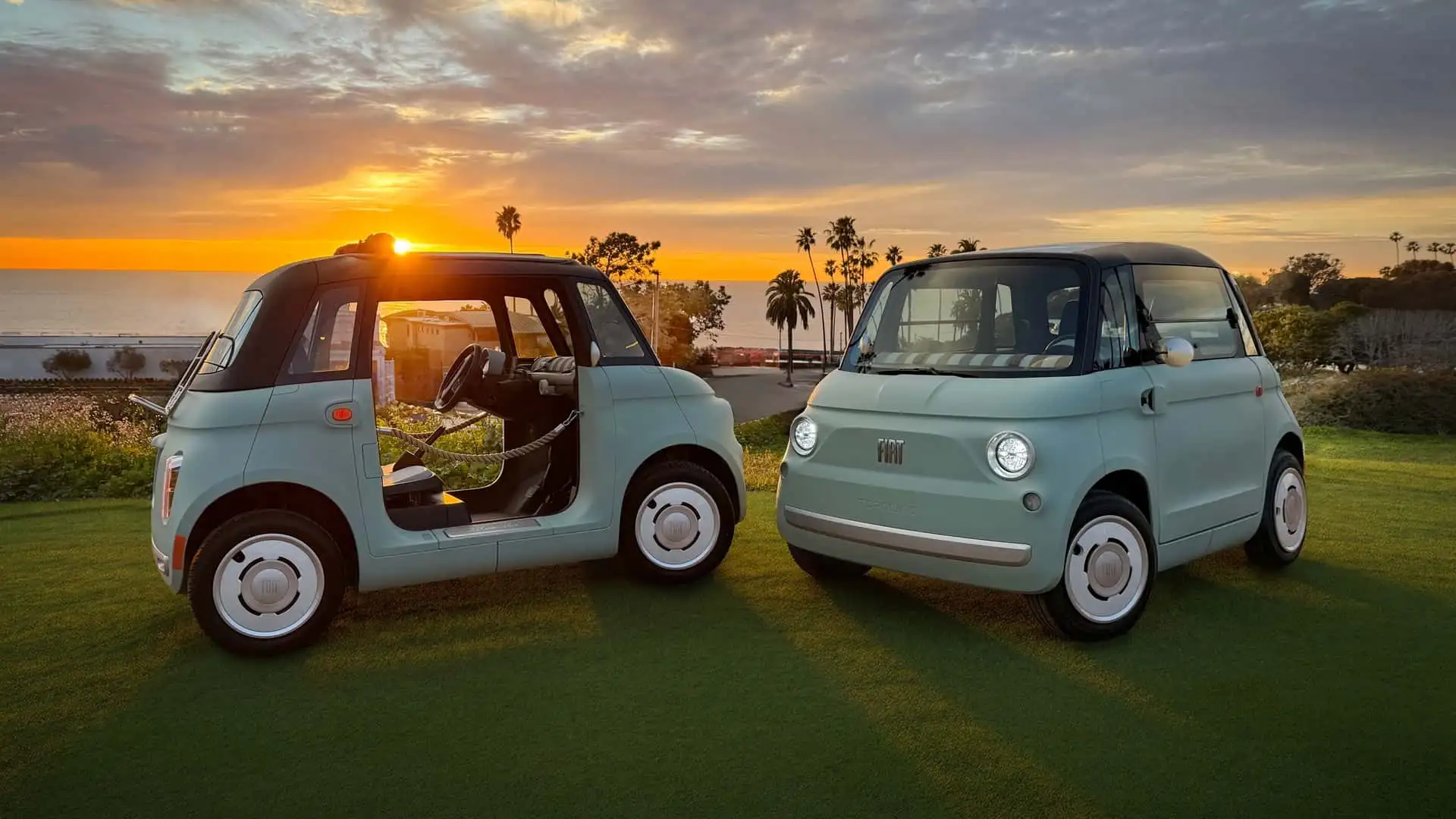
Photo: Fiat
Fiat’s tiny Topolino hit the U.S, market a bit early. It’s not technically a road-going EV (at least not without a conversion kit), but it’s claiming a big chunk of America’s golf cart market.
Lucid seems to be in the news for its finances more than its cars lately, but it’s time to fix that. The Lucid Air Sapphire is here to redeem the automaker's image by absolutely crushing a key performance test better than many supercars.
The Tesla Semi is finally saying hello to Europe. After nine years of waiting, the truck is headed to Germany next month, where it will officially debut at the IAA in Frankfurt.
China is pulling an Uno reverse card on the entire auto industry. It now believes the secret to domination lies in legacy automakers by flipping the entire joint-venture premise that unlocked China for foreign car companies upside-down.

Battery & Charging News

Photo: EVgo
Tesla’s Solar Roof is reportedly coming to an end. Its futuristic tiles were pitched as the future of solar (and roofing), and now, as the pages disappear from its website, reports from suppliers suggest that the product just isn’t “financially viable”
Volvo’s parent company is testing out solid-state batteries. Geely’s new 621-mile battery will begin piloting across its brands next year, and that could include cars from Volvo.
LG’s energy division hoped that EV demand would make its battery factories profitable. That didn’t work out, and now it’s racing to transition its battery factories once meant for EVs to outfit energy storage for data centers.

Autonomy & Tech News

Photo: Zoox
Tesla is dragging its feet to retrofit older customer cars to new hardware (eventually) capable of achieving unsupervised FSD. One owner took it upon themselves to beat Tesla to the punch and did it themselves.
Waymo’s new Zeekr Ojai EVs are officially on the prowl…for paid rides, that is. About 300 of the Chinese-built computer-on-wheels are now live in San Francisco, Los Angeles, and Phoenix.
Automakers are investing big time in AI right now. Not only is it speeding up their workflows, but it’s also becoming a potential new revenue stream in the latest subscription market grab.
Thanks for reading Critical Materials. See you next week!
If you love the InsideEVs newsletter, you need to check out the rest of the newsletters across the Motorsport Network:
The Update from InsideEVs: A newsletter to inform and empower a new generation of drivers about the high-tech, zero-emission transformation of the car industry. (Join now)
Motor1: The best car reviews, buying advice and enthusiast stories. (Join now)
For the racing fan: The daily Autosport Debrief delivers the best of Autosport to your inbox daily. (Join now)