
Happy Friday, and welcome to Critical Materials, your source for the biggest stories shaping the future of the auto industry.
Every Friday, we break down the week’s biggest EV news, keep you up to speed on the cars we’re testing, and recap must-read stories from around the web on driverless cars, batteries, charging, and more.
In today’s newsletter, I break down what the Ferrari Luce EV controversy tells us about the electric performance car industry. It ain’t great. But the tech behind these super-GTs sure is, as Suvrat Kothari explains in his story about the Mercedes-AMG GT 4-Door’s incredible battery breakthrough. Finally, Kevin Williams drove the Geely EX2, and it wasn’t hard to see how it became China’s best-selling car.
Before we dive in: Got any feedback on Critical Materials? Drop me a line at [email protected].
OK, let’s go!
– Today’s email was written by Suvrat Kothari, Rob Stumpf, Kevin Williams, and me, Mack Hogan.

Plug In: Who Cares About Performance EVs?
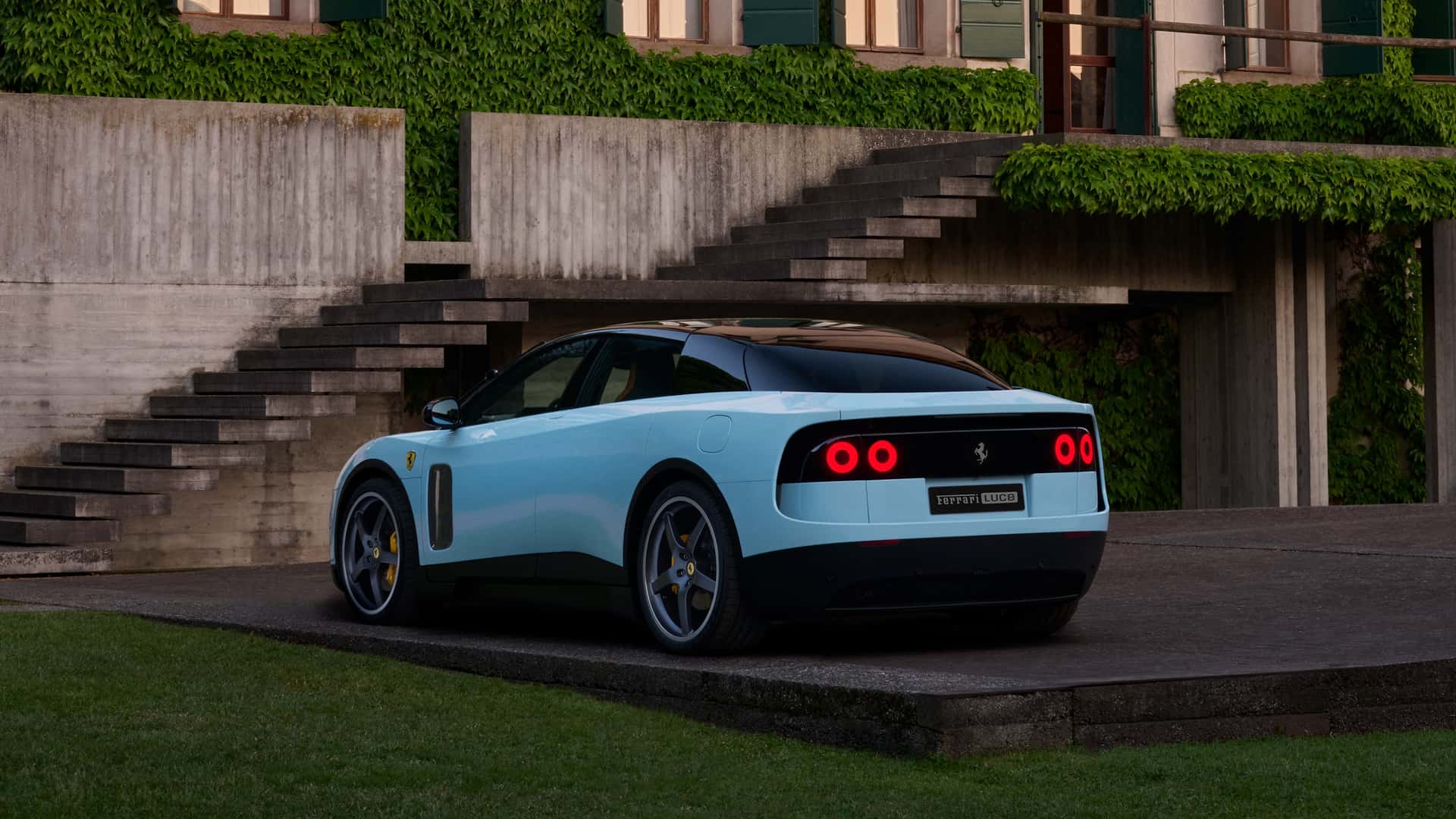
Photo: Ferrari
I came to the EV world from the performance car side of the automotive media industry. After a stint at CNBC, I made my name at Jalopnik and Road & Track, two outlets that focused heavily on traditional car enthusiasts. So when I came here, it wasn’t exactly news to me that traditional car enthusiasts didn’t care about electric performance cars. What surprised me was that EV enthusiasts don’t seem to care, either.
Whether it’s the new, 600-kW charging, silicon-anode-battery Mercedes AMG GT 4-Door or the Ferrari Luce, our readers don’t seem to care all that much. Based on traffic figures, InsideEVs fans would clearly rather read about Hyundais and Chevies than Porsches and Ferraris. That means Ferrari and other sports car brands have a few major problems:
Their traditional car enthusiast bases don’t seem interested in electric cars, and in some cases are directly opposed to them.
EV enthusiasts seem more focused on affordable performance and tech features than boundary-pushing hypercars.
Regulations in global markets are pushing them toward electrification, but EVs are heavier and, at least to their traditional buyers, less exciting.
Add those problems to a controversial design penned by iPhone designer Jony Ive’s firm, and it’s not hard to see why the Ferrari Luce arrived to such widespread scorn. I happen to like the design, in that it’s clear that this is meant to provide a new type of product to Ferrari buyers, not replace the sports and supercars. But even I can’t act surprised that people hate it.
But on its face, a 1,035-horsepower car with quad motors and fully adaptive suspension providing individual-wheel-level control should be a hoot to drive. So how do we get enthusiasts excited about EVs? I think three things have to happen:
Buyers need time. Ferrari buyers likely had posters of V-12 supercars on their walls forty years ago, when they were in high school. It was always going to take time for them to warm up to EVs.
Companies need to innovate with performance features that gas cars can’t match, like controlling all four motors independently to enable extra drifty modes, tank turns, and next-level torque vectoring.
EVs need to get lighter. Weight is the enemy of driving fun, and as long as the Luce weighs nearly 5,000 pounds, it’s not going to be able to feel as engaging as a 296 GTB on a back road.
All of that will come. Silicon-anode batteries, solid-state tech, and other advancements will reduce weights. Engineers will get better at tuning quad-motor setups and incorporating new technologies, like active suspensions.
But most importantly, people will get used to electric performance cars. They’ll see them spinning in place, blowing the doors off of gas-powered cars, and still performing better as utterly silent consumers, and eventually give them a chance. But like all new technologies, high-performance EVs have to overcome skepticism, confusion, and the biggest enemy progress has ever known: Inertia. Give it time.
-Mack Hogan

Get Fully Charged
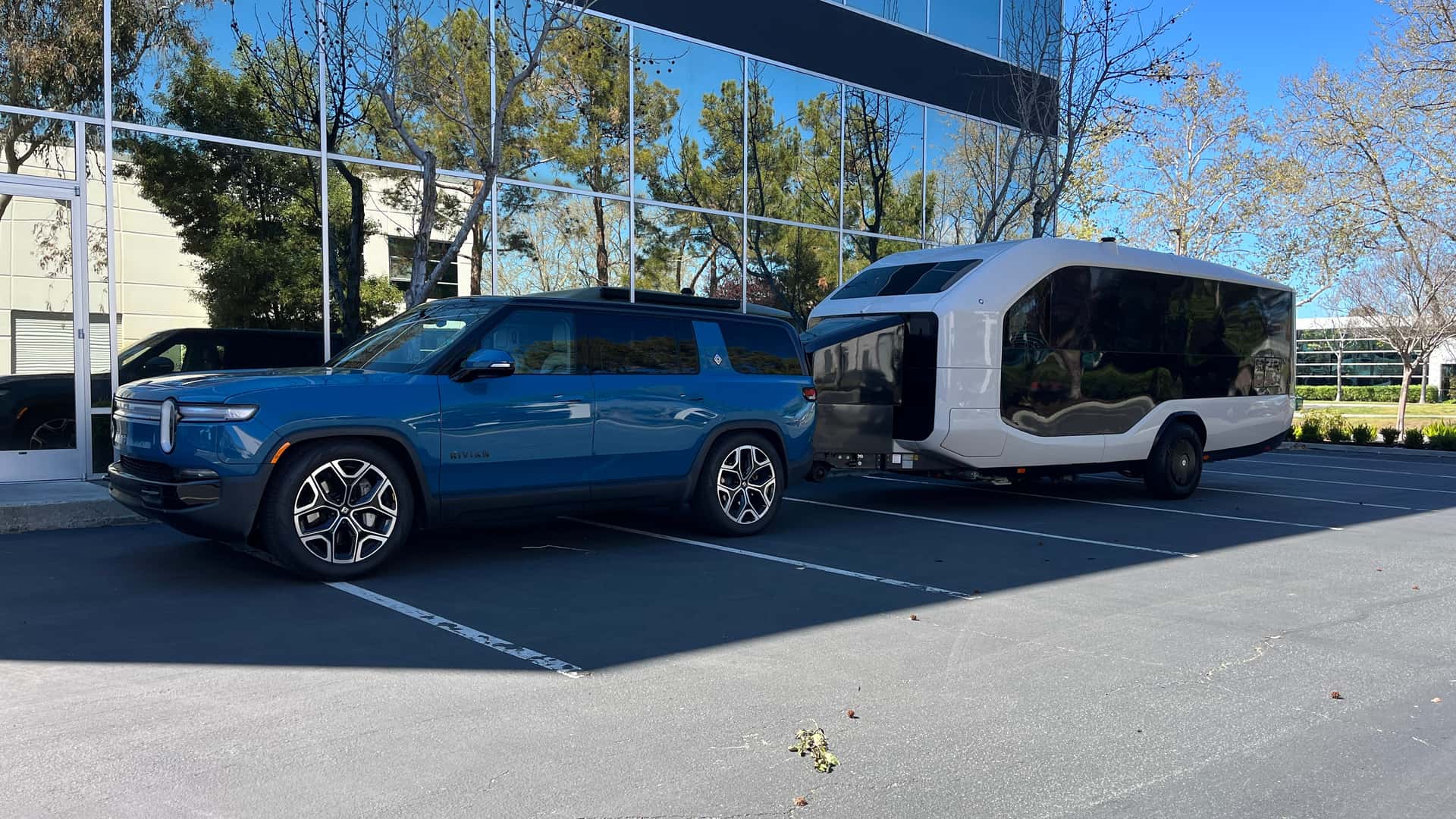
The Pebble Flow camper. Photo: Tim Levin
Get up to speed on the news that caught our eye this week:
We went camping in the Pebble Flow. This electric RV trailer is a new take on glamping, and it commands attention at any campsite that it visits. Check out our honest take on it.
Mercedes pulled out all the stops with the new AMG GT Coupe. It looks like a better Porsche Taycan on paper, but with a fresh new coat of paint and a wildly over-engineered battery. Take a look at what's inside the pack.
Rivian will begin delivering R2s in two weeks, with full orders opening to those who put down a deposit on the same day. We finally learned how reservations will be prioritized, plus what it means to buy now instead of waiting for lidar to be available.
The all-new Ferrari Luce is here, and it's the Italian's first take on a battery-electric supercar. The only problem? People seem to hate it. We think it's misunderstood. Here's what you need to know about the Ferrari Luce and its quirks.
China’s rise continues. Now, it isn't just exporting its EVs anymore. The country is exporting entire car factories in order to stay competitive amid a world of Western tariffs. As Nio's CEO puts it, China has moved past the "golden era" of EVs.
Rivian believes that your voice—not buttons or Apple CarPlay—is the future of in-car control. The automaker is betting big that AI will soon be the way that consumers control their vehicles, despite that not working out so well for other brands in the past.
Slate will soon begin taking orders for its low-cost EV. Starting on June 24th, you'll finally be able to pre-order one ahead of its launch. However, Slate has yet to actually announce the final price of the truck.
The Waymo Ojai is here! The Zeekr-based robotaxi will soon be one of the first major Chinese EVs on American roads, beginning its rollout in Arizona and California over the next few weeks. Rides will be free (at first) to gather feedback about the new platform so that the AV operator can refine the experience.
Volvo will be permitted to import connected vehicles despite ties to its Chinese parent company, Geely. The U.S. granted Volvo an authorization allowing it to circumvent the restriction imposed by the Department of Commerce back in March.
-Rob Stumpf

One More Thing: Mercedes-AMG’s Silicon Anode Breakthrough

Photo: Mercedes
The latest-generation Mercedes-AMG GT 4-Door Coupe divided the internet with its polarizing design and an all-electric powertrain that ditches the old V8. But its cutting-edge battery technology might have implications for the broader EV industry.
The big picture: The AMG GT arrives later this year as the fastest-charging EV in America, with a peak charging rate of 600 kilowatts and a 10-80% charge time of just 11 minutes. Enabling this is a silicon-containing anode—the part of the battery cell that stores energy—and an overengineered cooling system that pushes the boundaries of today’s batteries.
The battery basics:
The AMG GT gets 106 kilowatt-hours of usable battery capacity and 300+ miles of range.
It can add 250 miles of range in just 10 minutes of charging at a 600 kW-capable station.
Its energy density of 298 watt-hours per kilogram is at the high end of today’s cells.
While the anode contains silicon, the cathode uses nickel, cobalt, manganese, and aluminum (NCMA) chemistry optimized for range.
Why it matters: Graphite has long been the default anode material, known for its stability and energy density. But China has an iron grip over its supply chain. Mercedes-AMG, like General Motors and startups such as Group14 and Sila, is integrating silicon-graphite anodes to reduce reliance on China and to improve battery performance.
Silicon can absorb and store far more electrons than graphite, allowing them to travel much faster within the membrane, enabling blistering vehicle performance and fast-charging speeds, battery researchers have said. It’s still niche, expensive, and not scalable enough to challenge graphite at volume. Historically, it has also faced issues such as swelling and reduced lifespan.
Between the lines: Managing heat at 600 kW of charging is also a serious engineering problem. So Mercedes-AMG incorporated one of the most comprehensive cooling systems in an EV.
The AMG GT uses slim cylindrical cells, 4.1 inches tall and 1 inch in diameter. The smaller diameter shortens the path from the cell core to the surface, speeding heat dissipation.
The coolant flows evenly around all 2,660 individual cells.
"On-demand cooling" targets hot spots by module, rather than flooding the entire pack.
A central coolant hub redirects coolant to components that need it, and away from those that don’t, improving efficiency.
The bottom line: The real test will be longevity and consistency, whether it holds up with minimal degradation over years of real-world use. And if that does happen, the bigger hope would be for this tech to eventually trickle down to mass-market models so everyone can benefit from 10-minute charging, not just those who can afford expensive EVs.
-Suvrat Kothari

Driver’s Seat: Geely EX2

Photo: Kevin Williams
In China, there are a huge number of EVs on sale that aren’t so pricy. For the cost of a well-used ten-year-old compact car in the U.S., Chinese shopper have their pick of the litter of cheap, small, fully-electric hatchbacks. A few weeks ago, I got a chance to get behind the wheel of China’s best-selling electric car: the Geely EX2.
Yes, you’ve read that right. The Geely EX2 (or Xingyuan) is actually China’s best-selling car, period. This beats out both the BYD Seagull and the Tesla Model Y, both of which have been China’s top dog in years past. Yet, Geely sold a whopping 465,00 units of the Chevrolet Sonic-sized EX2 hatchback last year, besting the Model Y’s 425,000 sales. That’s an impressive feat, especially since there are a lot of competitors in China’s small EV space. The EX2 is holding its own in a crowded segment.

Photo: Kevin Williams
I quickly understood why the EX2 is a winner. Compared to the BYD Seagull, it has extra space. For example, the Seagull only seats four, while the EX2’s longer length and wider body allow it to seat five. Add in the rear-wheel-drive design, extra rear cargo room, and frunk of the EX2, and it feels like a more practical car. All of this can be had for about $10,000.
Dynamically, I thought the EX2 was okay. I drove a more expensive example, which had an optional 114-horsepower motor and 40 kWh battery. Together, they beat China-spec Seagull’s 75-horsepower and 38 kWh battery, which I drove last year. At least from the seat of my pants, the EX2 felt a lot quicker than the Seagull, but I think the Seagull’s steering and handling were superior. Still, the EX2 felt like a hell of a lot of car for not much money.
Now, the EX2’s unlikely to come to the U.S., but it has already started heading out of China to other markets. So, if you’re in places like Malaysia, Brazil, or Australia, you’ll be able to experience the EX2 for yourself.
-Kevin Williams
Before You Go
Want to hear what the Ferrari Luce will sound like? Thanks to a video from our friends at Motor1, you can. The sound is an amplified version of the powertrain’s real noise, picked up via an accelerometer attached to the inverter. It certainly sounds interesting.
Thanks for reading Critical Materials. See you next week!
-Mack Hogan
If you love the InsideEVs newsletter, you need to check out the rest of the newsletters across the Motorsport Network:
The Update from InsideEVs: A newsletter to inform and empower a new generation of drivers about the high-tech, zero-emission transformation of the car industry. (Join now)
Motor1: The best car reviews, buying advice and enthusiast stories. (Join now)
For the racing fan: The daily Autosport Debrief delivers the best of Autosport to your inbox daily. (Join now)